
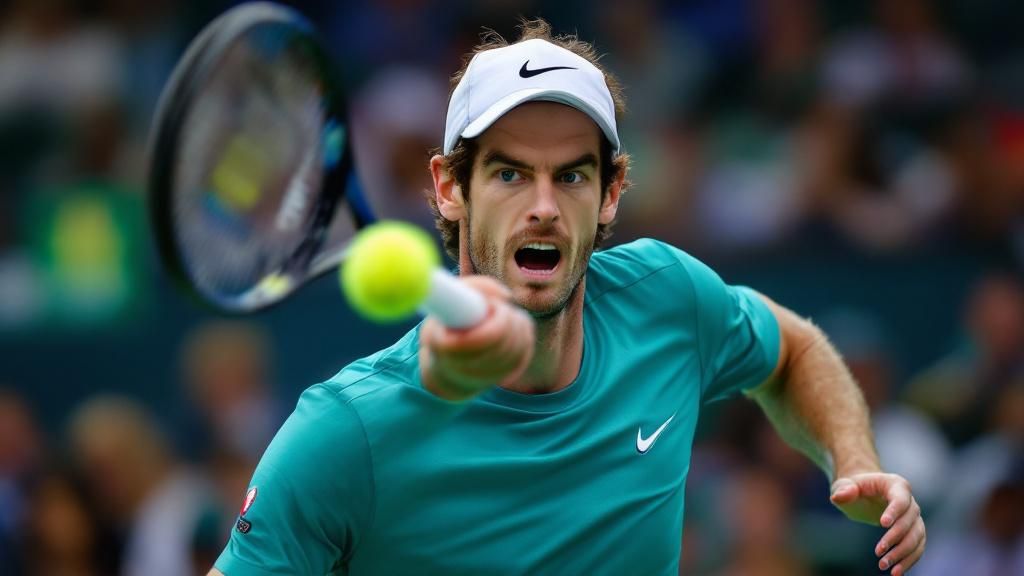
Andy Murray’s carefully orchestrated comeback to professional tennis has created ripples across the British athletics hierarchy, indicating a likely revival for the nation’s most accomplished player. Following his career-threatening hip surgery, Murray’s measured reintroduction to competitive play promises to transform the landscape of British tennis, encouraging a emerging generation whilst reigniting hopes of additional major championship victories. This article examines how his careful strategy to competitive play is affecting grassroots growth, mentoring emerging talent, and establishing Britain as a competitive powerhouse in global tennis.
The Champion’s Return
Andy Murray’s re-entry into professional sport signifies considerably more than a individual accomplishment; it embodies grit and resolve that reverberates through British sport. After undergoing a potentially career-ending hip surgery, many questioned whether the three-time major winner would ever compete at the highest level again. His decision to stage a comeback, however, displays steadfast dedication to his sport and an unbreakable resolve that has characterised his competitive life. The global sports community observes with keen interest as Murray tackles this transformative period, demonstrating that age and injury need not dictate an athlete’s path or performance goals.
The implications of Murray’s calculated reentry go far past his personal results on court. His participation in professional tournaments energises British tennis, providing a concrete demonstration of resilience to emerging athletes facing their own obstacles. Moreover, his return story provides invaluable lessons in mental fortitude and athletic recuperation, establishing new markers for athletic longevity. As Murray returns to competition, he concurrently guides the younger cohort, creating a connection between established excellence and rising prospects that strengthens the entire British tennis ecosystem.
Impact on British Tennis Development
Murray’s re-entry into competitive play has sparked considerable impetus within UK tennis development. His presence at premier competitions enhances the game’s standing within the UK, attracting enhanced financial support in youth development programmes and training facilities. The knock-on benefits reach past top-level competition, encouraging local engagement and pushing governing bodies to focus on talent spotting and development routes for up-and-coming British talent.
Mentorship and Direction
Beyond his on-court displays, Murray has taken on an increasingly prominent mentoring role within the British tennis community. His readiness to impart expertise acquired through competing at the highest level provides essential support to younger players charting their own career trajectories. This informal coaching impact enhances established programmes, delivering useful knowledge into tournament preparation, psychological strength, and handling professional expectations.
Murray’s openness to up-and-coming athletes signals a break with established pecking orders across professional competition. By engaging directly with gifted junior competitors, he exhibits a commitment towards the collective progress of British tennis. His guidance stretches past purely technical training, encompassing career development, sponsorship deals, and psychological strategies crucial for maintaining sustained competitive performance on the international stage.
- Provides expert advice on tournament selection and planning
- Shares mental resilience techniques built over career
- Facilitates introductions to coaching and support staff networks
- Demonstrates professional standards through reliable dedication
- Encourages equilibrium between drive and individual health
Competitive Results and Standings
Murray’s comeback to professional competition has exhibited considerable mental strength, with his statistical indicators revealing a player determined to reclaim his position amongst tennis’s elite. Despite the inherent physical rigours of professional competition, his positional progression has progressively advanced, showcasing his tactical expertise and emotional strength. His victories against established competitors have sparked renewed debate about his capacity to challenge for major titles, whilst simultaneously providing important insights on his rehabilitation status and playing condition.
The deliberate strategy of Murray’s tournament selection has been crucial in managing his recuperation whilst preserving competitive edge. By thoughtfully juggling high-level competition with adequate recovery periods, he has enhanced his performance trajectory without compromising lasting viability. His achievements have energised UK tennis fans and commentators alike, proving that age and previous injury need not reduce a competitor’s drive or achievements at the highest echelons of elite competition.
Future Prospects and Legacy
Andy Murray’s deliberate re-entry to competitive tennis has fundamentally altered understandings of what represents a thriving career in tennis. His measured approach illustrates that longevity and purposeful competition can coexist bodily constraints, delivering meaningful guidance to aspiring athletes globally. The ripple effects of his comeback go further than private accomplishment; Murray’s presence on the circuit energises the British tennis system, drawing investment and media attention previously directed elsewhere. His impact on emerging talent illustrates how seasoned expertise and determination go beyond standard career patterns, establishing new benchmarks for athletic perseverance.
Looking forward, Murray’s legacy will undoubtedly comprise more than tournament victories and ranking positions. His dedication to developing emerging British talent has created a lasting foundation for the coming generation of competitors aiming for international success. By balancing competitive ambitions with developmental responsibilities, Murray has positioned himself as both competing player and guardian of British tennis’s future. This combined position bolsters the nation’s sporting framework whilst ensuring his considerable expertise benefits the sport long after his final playing career, cementing his status as pivotal force within British sporting history.
