
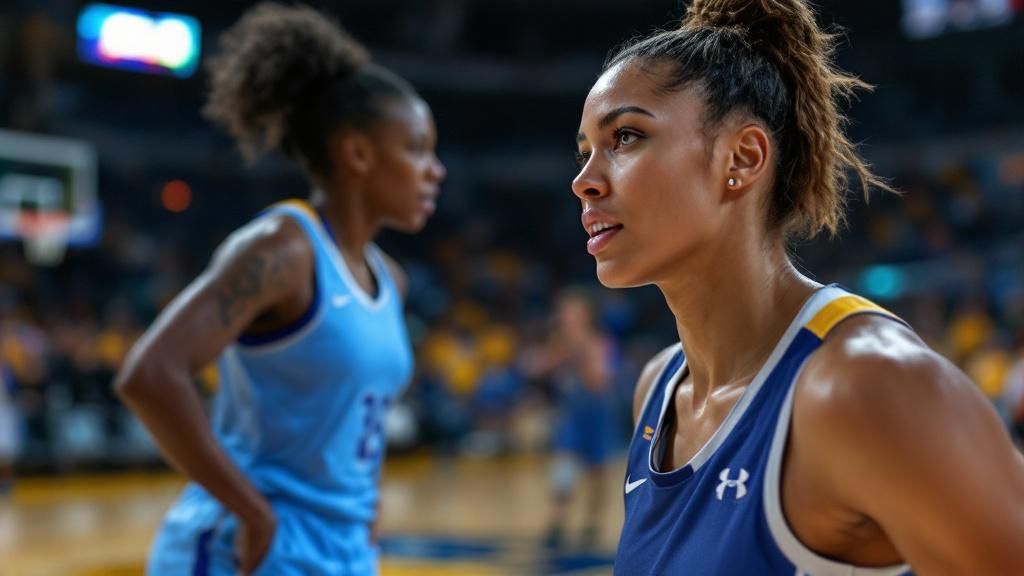
Women’s basketball players around the world are growing more outspoken in their demands for equal pay and substantial investment in their sport. Despite years of athletic excellence and expanding audience interest, female athletes still earn significantly less than their male counterparts, whilst getting little media coverage and sponsorship opportunities. This article examines the ongoing campaign for gender equity in professional basketball, analysing the systemic barriers players face, the monetary rationale supporting their demands, and the fundamental reforms needed to ensure women’s sport obtains the recognition and resources it rightfully deserves.
The Pay Gap Crisis in Women’s Basketball
The wage disparity between male and female elite basketball athletes exemplifies one of sport’s most prominent disparities. Women playing in top-tier leagues earn a fraction of their male counterparts’ earnings, with some players taking home annual pay far under the poverty line. This gap extends beyond fundamental wages to cover sponsorship deals, commercial partnerships, and broadcasting rights, producing a multiplying setback that damages long-term career viability and professional growth for female athletes.
Investment differences compound the pay gap, with women’s leagues obtaining scant resources for facilities, promotion, and athlete development initiatives. Whilst men’s basketball organisations benefit from significant TV agreements and commercial backing, women’s teams face restricted funding that limit roster depth, calibre of coaches, and venue quality. These structural imbalances sustain a cycle where underfunding creates lower public profile, which in turn rationalises reduced funding, ultimately harming players who warrant equitable compensation for their ability, effort, and capacity to engage audiences.
Capital Gaps and Media Coverage
The financial gap between men’s and women’s elite basketball continues to be staggering, with investment in women’s leagues considerably trailing their male counterparts. Broadcasting companies allocate considerably less broadcasting hours to women’s matches, resulting in diminished exposure and sponsorship revenue. This disparity extends to playing venues, coaching resources, and advertising investment, creating a repeating pattern where lower investment leads to decreased prominence, which thereafter supports continued spending decreases. The consequence is a structural inequality that damages the development and competitive standard of women’s basketball globally.
Media coverage plays a crucial role in establishing the commercial viability of any sport, yet women’s basketball receives a tiny share of the airtime committed to men’s matches. Major media outlets often place women’s matches at awkward times or assign them to lesser platforms, restricting audience reach and engagement. This disparity in airtime directly affects sponsorship opportunities and merchandise sales, leaving female athletes with limited financial benefits. Resolving these disparities requires sustained investment from television networks, broadcasters, and commercial partners who recognise the untapped potential and growing fanbase within women’s professional basketball.
Player-Led Movements and What Lies Ahead
Women’s basketball players have emerged as powerful advocates for systemic change, leveraging their public standing to address entrenched inequalities and catalyse collective action. Players such as Sue Bird and Diana Taurasi have become vocal champions for equitable funding, harnessing their prominence to highlight the difference between men’s and women’s professional sports. Their activism has generated productive discussions amongst administrative organisations, sponsors, and broadcast platforms, proving that collective player action can drive measurable advancement. Through structured advocacy efforts and visible activism, these athletes persistently strengthen appeals for far-reaching change across salaries, facilities, and media coverage.
The path ahead of women’s basketball requires sustained commitment from diverse organisations committed to authentic transformation. Forward-thinking policies introduced by leagues such as the WNBA—including increased wage structures and improved marketing initiatives—offer strong models for international organisations. However, considerable barriers remain, requiring ongoing advocacy from players, backing bodies, and active advocates. The path of women’s professional basketball will ultimately reveal society’s willingness to fairly support female athletes, recognising both their outstanding ability and their essential role to the cultural significance of sport.
Looking forward, the convergence between player activism and organisational reform presents unprecedented opportunities for reshaping professional basketball’s future. By maintaining momentum and demanding accountability, women athletes continue paving pathways towards genuine equality, motivating younger generations whilst fundamentally transforming perceptions of women’s sport globally.
